


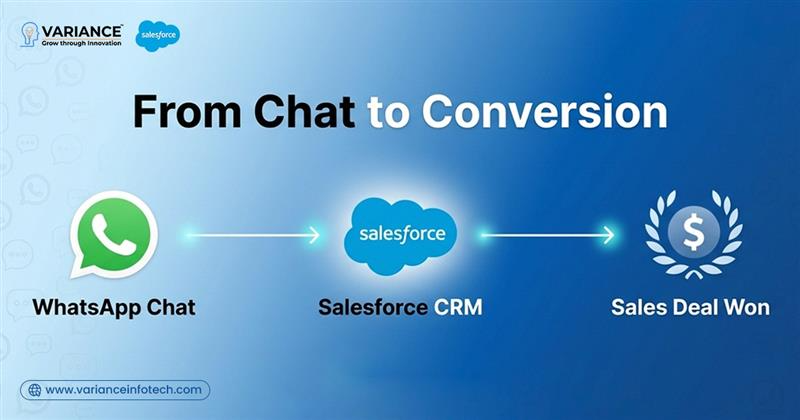
Customers expect to, and are able to, easily and quickly communicate with the brands that they select. Messaging platforms such as WhatsApp have facilitated direct interaction between companies and their audiences.
When integrated with Salesforce CRM, WhatsApp is not just a messaging tool. It opens up a whole new platform for lead management, customer service and relationship building.
Savvy companies areenthcpabitlys embracing this integration to enhance their communications and remain competitive in an ever changing digital landscape.
If you run an organization that delights in a faster sales support and a better customer experience, then signing up for WhatsApp and Salesforce integration will bring you in the right direction.
The Rise of Messaging in Customer Communication:
Modern customers prioritize convenience and pace.It’s that simple: it’s easier to send a quick message than to fill out a form or phone the call centre. WhatsApp enables customers to connect immediately, inquire and get answers on the spot.
But for a company, managing hundreds or thousands of messages can quickly become overwhelming without a proper system in place. Conversations get scattered across devices, team members miss key messages, and follow-ups slip through the cracks.
The integration of WhatsApp with Salesforce addresses such issues by unifying communications in a single, organized platform.
Centralizing Customer Conversations in Salesforce:
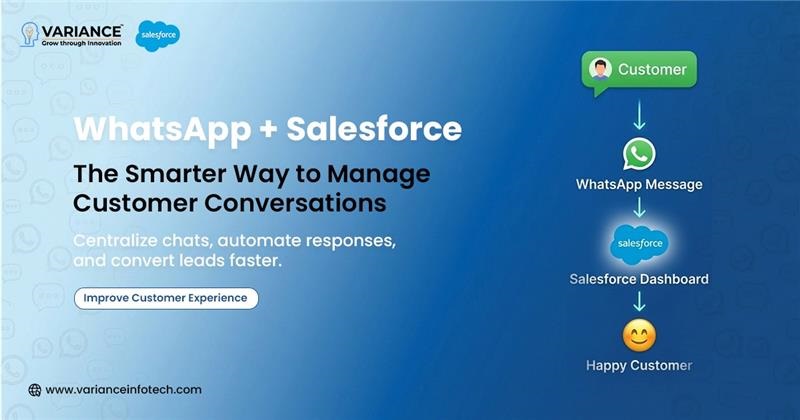
Among the most popular features of the WhatsApp and Salesforce integration is the consolidation of customer interactions within a single system.
Every message sent via WhatsApp can be logged in Salesforce, along with customer data, interaction records, and any other linked jobs or activities. Whenever sales teams, support agents, or managers want to, they can pull up these details.
Together, that provides teams with a clearer understanding of the customer journey. Instead of guessing what transpired in prior conversations, they have access to the full interaction history and are able to respond with more context.
Faster Responses That Improve Customer Experience:
Speed is important to customer satisfaction. When a person sends a message enquiring about a product or service, they are generally expecting a fast reply.
With Salesforce and WhatsApp integration, companies can get back quicker with automated flows and real-time alerts. Multiple questions on the same stream can be subdivided among various team members, providing customers with a swift response.
Prompt replies have the dual advantage of increasing customer satisfaction and enhancing the probability of making a sale out of an enquiry.
Automating Routine Communication:
Not every customer message needs to be handled manually. A lot of queries are the same questions (on pricing, product information, availability of appointments or status of an order).
Salesforce automation enables organizations to develop canned responses in such scenarios. Customers can get instant replies as they wait for the system to collect information or transfer the chat to a human.
Automation can be used to run multiple processes such as sending order confirmations, appointment reminders and follow-up messages. It’s a win-win: customers receive timely information while teams are not overwhelmed.
Turning Conversations into Sales Opportunities:
WhatsApp chats frequently start with basic questions—but can rapidly evolve into real sales opportunities. When you integrate WhatsApp with Salesforce, new enquiries are turned into leads in the CRM automatically. The sales team can then track these leads, assign reps, and work them through the sales pipeline. Rather than losing potential customers for response time lag or missed messages, companies can capture every lead, and take prospects to the point of purchase. This organization lends itself to casual conversations being more easily turned into actual revenue.
Personalized Communication That Builds Trust:
Customers really love the companies,, that know what their needs and wants are and what they want to buy. From The View point of Trust the answer is: yes, personalized communication contributes to trust communication.
As customer data, such as past purchases, previous conversations and preferences are stored in Salesforce, this information is available when communicating via WhatsApp. Sales reps can offer tailored product recommendations, and support teams can provide solutions informed by a customer’s history. This kind of personalization results in more meaningful conversations and happier customers.
Enhancing Customer Support:
Customer service is yet another place the WhatsApp and Salesforce integration adds incredible value.
Support agents can juggle multiple chats while viewing customer’s records and previous requests right inside Salesforce. When a customer reports an issue on WhatsApp, a support ticket is created automatically within the system.
This is a guarantee that all bids are accounted for and attended to. Bet ter support for faster problem resolution leads to best customer experiences and greater loyalty.
Real-Time Notifications and Updates:
Buyers like to know what’s happening with their orders, services or requests. Salesforce automation integrated with WhatsApp enables businesses to send automatic updates in real-time.
Such as when an order is confirmed, shipped or delivered for the case of customers. Payment confirmations and appointment reminders too can be sent instantly.
Such proactive updates keep customers active and informed, and significantly reduce the support queries.
Using Data Insights to Improve Customer Engagement:
Salesforce has robust analytics and reports to analyze how customers engage with their business. When WhatsApp chats are brought into the CRM, organizations can track metrics such as response time, message engagement, and conversion rates. With this information, businesses can modify their communication strategies and enhance the customer experience on an ongoing basis.
Final Thoughts:
With those changing customer expectations, companies need to change along with them. Messaging platforms such as WhatsApp have become critical communication channels, with customers enjoying the speed, convenience and familiarity that they offer.
Salesforce with WhatsApp integration allows businesses to prioritize conversations, respond more quickly and offer personalized customer experiences.
But more significantly, this integration enables brands to convert one-to-one conversations into lasting customer relationships and profitable sales opportunities.If you’re a business who wants to enhance customer interaction, facilitate communication, and generate more leads, the WhatsApp and Salesforce integration is a useful and robust answer.
Do You Need more information?
For any further information / query regarding Technology, please email us at info@varianceinfotech.in
OR call us on +1 630 534 0223 / +91-7016851729, Alternately you can request for information by filling up Contact Us

 Please wait...
Leave a Reply