


Customer communications have dramatically transformed in the era of digital. Today, companies have millions of customer interactions by phone, email, chat and social media. Although Customer Relationship Management (CRM) systems enable better management of this data, the real revolution occurs when voice communication is natively integrated with the CRM system.
This is where Salesforce Telephony Integration is vital to revolutionize the CRM communication.
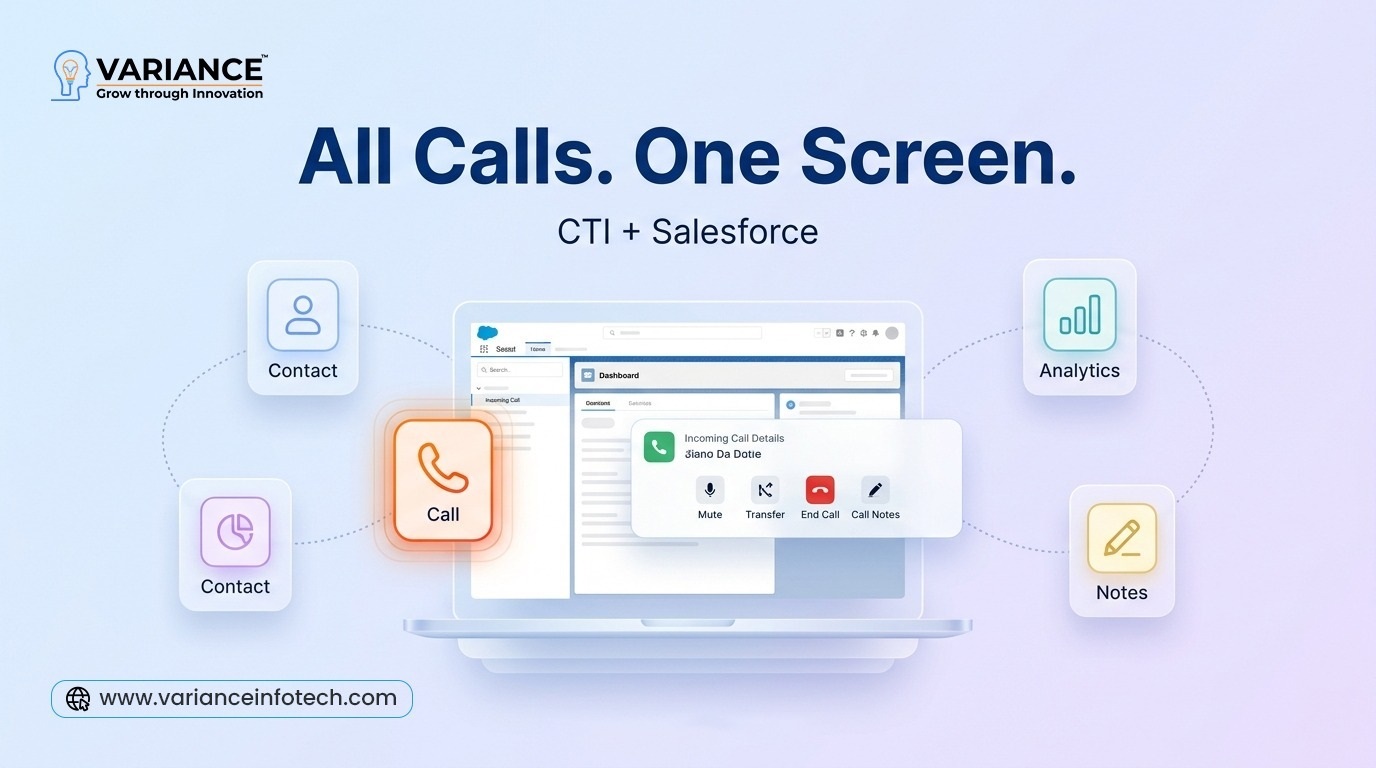
By integrating your telephony system with Salesforce, your teams can make and receive calls, view caller details, access customer data, and log interactions right from a single screen. This means that you respond to customers quicker, are more productive, and deliver a more personalized customer experience.
In this blog post, we will discuss what is Salesforce telephony integration, how does it work and why it is becoming a necessary for business of today.
What is Salesforce Telephony Integration?
Salesforce Telephony Integration (CTI Integration) is a service which enables interaction between Salesforce CRM and a phone system. It helps users to call, receive as well as manage calls within salesforce without having rely on different application.
For each inbound call, Salesforce will pop up the customer details including contact record, previous cases or open cases. That way, agents have everything they need to know at their fingertips before they even say hello.
The integration usually consists of features like:
- Click-to-dial functionality
- Automatic call logging
- Screen pops showing customer information
- Call recording and tracking
- Smart call routing
- Real-time reporting and analytics
With these features, companies can turn their CRM into a communication powerhouse.
Why Salesforce Telephony Integration Matters
In many companies, the sales and support teams still toggle between phone software and CRM systems. This results in inefficiency, lost information, and slower response times.
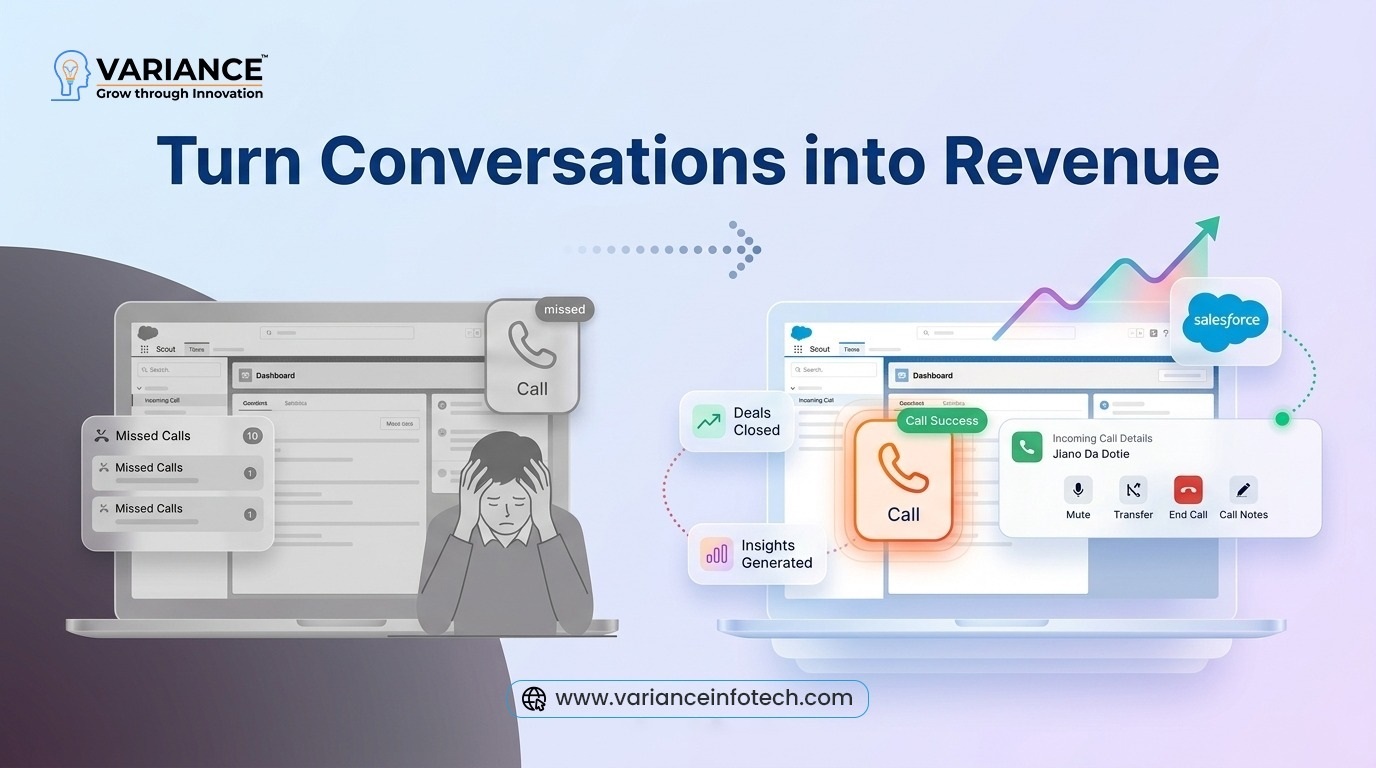
Salesforce telephony integration overcomes these hurdles by integrating everything on one platform. Agents can access information about customers, answer calls and update records directly from Salesforce.
As cloud telephony and CRM integrate, businesses are able to provide quicker and more personalized customer service while enhancing—internally at least—productivity.
Key Features of Salesforce Telephony Integration
1. Click-to-Call Functionality:
Click-to-call enables users to make calls from within Salesforce with a single click on a phone number in a contact, lead, or opportunity record. Enable direct dial, and eliminate misdials.
Salespeople are able to reach potential customers at a quicker pace, which leads to more calls in a shorter amount of time and increase in overall sales efficiency.
2. Automatic Call Logging:
Every inbound and outbound calls are logged automatically in Salesforce. That data includes call length, timestamps, and notes about the conversation.
Automatic logging eliminates the need for manual entry and guarantees an accurate record of every interaction with the customer.
3. Screen Pop-Ups with Customer Information:
Among the most powerful feature of the CTI is the screen-pop. When a call comes in, Salesforce immediately shows relevant information about the customer, such as prior interactions, purchase history and open support tickets.
This allows agents to provide faster, more personalized responses.
4. Intelligent Call Routing:
Advanced telephony systems have the capability to forward calls automatically using information about the customer, their location, level of priority, or service needs.
This ensures that the customer is connected to the appropriate agent or department, and avoid unnecessary call transfers.
5. Real-Time Analytics and Reporting:
The Salesforce telephony integration provides extensive call information that is then available for use in analytics and reporting of performance.
Salesforce dashboards give managers real-time visibility into volume, response times, agent performance, and customer satisfaction scores.
These insights enable organizations to continually refine their communication approaches.
Benefits of Salesforce Telephony Integration
Improved Customer Experience:
Agents can offer faster, more personalized support when they have immediate access to customer information during calls. Customers don’t have to repeat their problems over and over again.
This results in higher customer satisfaction and enhanced relationships.
Increased Productivity:
Automation features such as click-to-dial, auto call logging, and screen pops reduce agent administrative tasks. Teams are able to spend less time managing data, and more time problem-solving and closing deals.
Faster Call Resolution:
With easy access to customer information, agents can quickly gauge the context of the call and speed up resolution.
This increases first-call resolution and decreases call handling time.
Better Data Accuracy:
All communication is logged automatically in Salesforce. This guarantees that the customer data is clean and accurate, which in turn could be used in future interaction and reporting.
Enhanced Team Collaboration:
Since all call data is logged in the CRM, sales, support, and service teams can view the same information. This provides collaboration and provides a consistent customer experience.
Industries That Benefit from Salesforce Telephony Integration
Telephony integration for Salesforce is popular in across a wide range of industries like:
- Customer support centers
- Sales teams and outbound call campaigns
- Financial services
- Healthcare providers
- Telecommunications companies
- E-commerce businesses
Any company that receives a high number of calls from customers can greatly increase their productivity by the use of this integration.
The Future of CRM Communication
CRM communication in the future is going to be AI-powered omnichannel engagement. Salesforce is constantly adding more telephony functionality, such as real-time transcription, AI insights and automated recommendations.
Voice discussions are no longer isolated transaction—they will become part of a holistic customer data ecosystem.
With AI, automation, and predictive analytics, Salesforce telephony integration will continue to change how organizations engage with their customers.
Final Thoughts
In the competitive world of business today, strong communication is necessary to establish the rapport with the customers. Salesforce telephony integration closes the distance between CRM data to voice communication allowing your teams to interact faster, smarter, and with more personalized engagements.
With the integration of telephony within Salesforce itself, companies can now optimize their operations, increase customer satisfaction, and capture useful data on every call.
Companies that adopt this technology now will be the ones to win the future of CRM communication.
For any further information / query regarding Technology, please email us at info@varianceinfotech.in
OR call us on +1 630 534 0223 / +91-7016851729, Alternately you can request for information by filling up Contact Us
Do You Need more information?
For any further information / query regarding Technology, please email us at info@varianceinfotech.in
OR call us on +1 630 534 0223 / +91-7016851729, Alternately you can request for information by filling up Contact Us

Urvi Solanki
Urvi is a marketing strategist at Variance Infotech, specializing in promoting the company's expertise in mobile app development and CRM solutions, including SuiteCRM and Salesforce, across various industries. With a focus on helping businesses enhance their digital presence, she plays a key role in driving growth and innovation, making a significant impact on the global digital landscape.
 Please wait...
Leave a Reply