


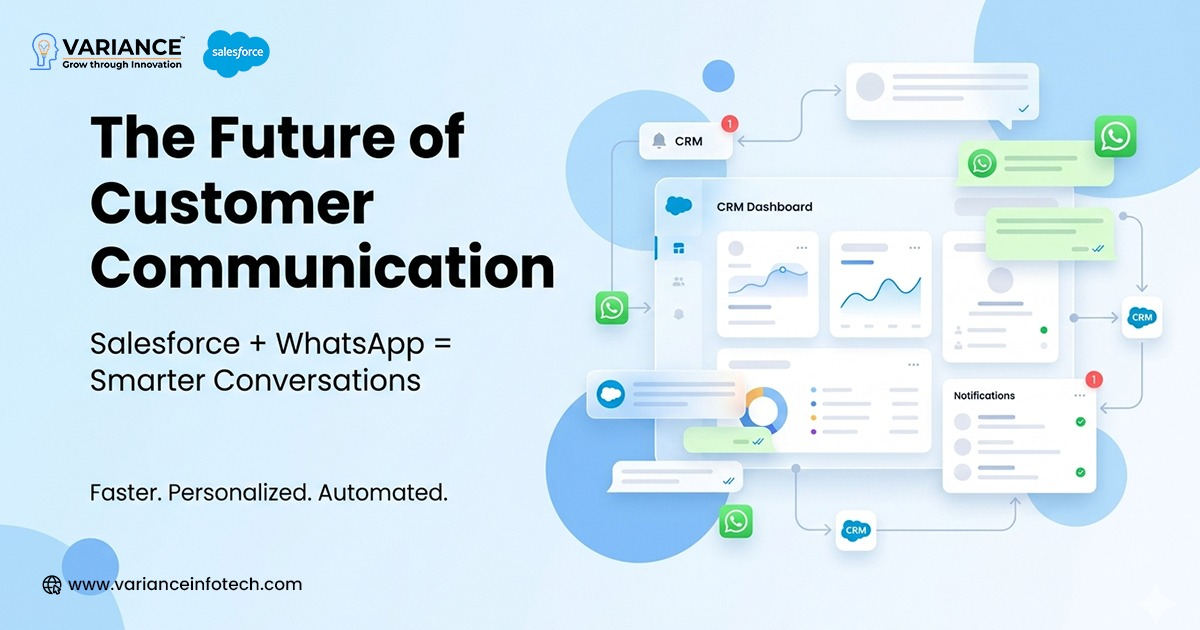
WhatsApp has increasingly become a channel where customers initiate conversations with many businesses today. Even a simple message to inquire about costs, product availability, or services can turn into a lucrative sales opportunity.
Yet many organizations still conduct these chats manually. Messages are answered on personal phones, customer information is not properly documented, and following up is a matter of memory or jumbled notes. Because of this, leads are often missed or forgotten.
Connecting WhatsApp Business to Salesforce solves this issue. It makes it possible for businesses to effortlessly capture customer queries and turn them into organized leads in the CRM. This allows salespeople to more easily track conversations, manage leads and respond in a timely manner.
In this post, we’ll show how to take leads from WhatsApp directly into Salesforce and manage them better.
Why Capturing WhatsApp Leads Is Important:
Speed and convenience are the reasons why customers are attracted to Messaging apps. Rather than completing forms or emails, they can just send a short message and get a response.
These discussions frequently involve prospective customers who have already been interested in a product or service. But these queries are also the ones that the business is most likely to lose if it does not capture them well.
Businesses can even make every query a lead by logging WhatsApp conversations natively in Salesforce so that every inquiry becomes part of their lead management process.
Benefits of Integrating WhatsApp with Salesforce:
However, a brief overview of the process is useful to understand why this integration makes sense for businesses.
When linked with Salesforce, each WhatsApp chat can be turned into a lead in the CRM. Customer data and the conversation history are integrated with a single interface, so it is easier for teams to follow up and keep records organized.
The sales team has a better response time, clearer records of customer interactions, and won’t let any lead fall through the cracks.
Step 1: Set Up WhatsApp Business API:
The first step is to get the WhatsApp Business API. Unlike the normal WhatsApp app, the API enables businesses to connect WhatsApp with external systems like CRM solutions.
With the API, a business can send and receive messages programmatically, allowing for workflows to be automated and data to be captured from customer interactions.
After the WhatsApp Business API has been set up, you can then connect it with Salesforce using a reliable integration solution.
Step 2: Connect WhatsApp with Salesforce:
Once your API is set up, the next step will be to integrate it with salesforce.
This integration enables incoming WhatsApp messages to go straight to the CRM. Rather than managing conversations individually, companies can see and respond to all of their interactions with customers in Salesforce.
Based on the configuration, messages can be associated with existing contacts, or they can automatically create new leads.
Step 3: Automatically Create Leads from Incoming Messages:
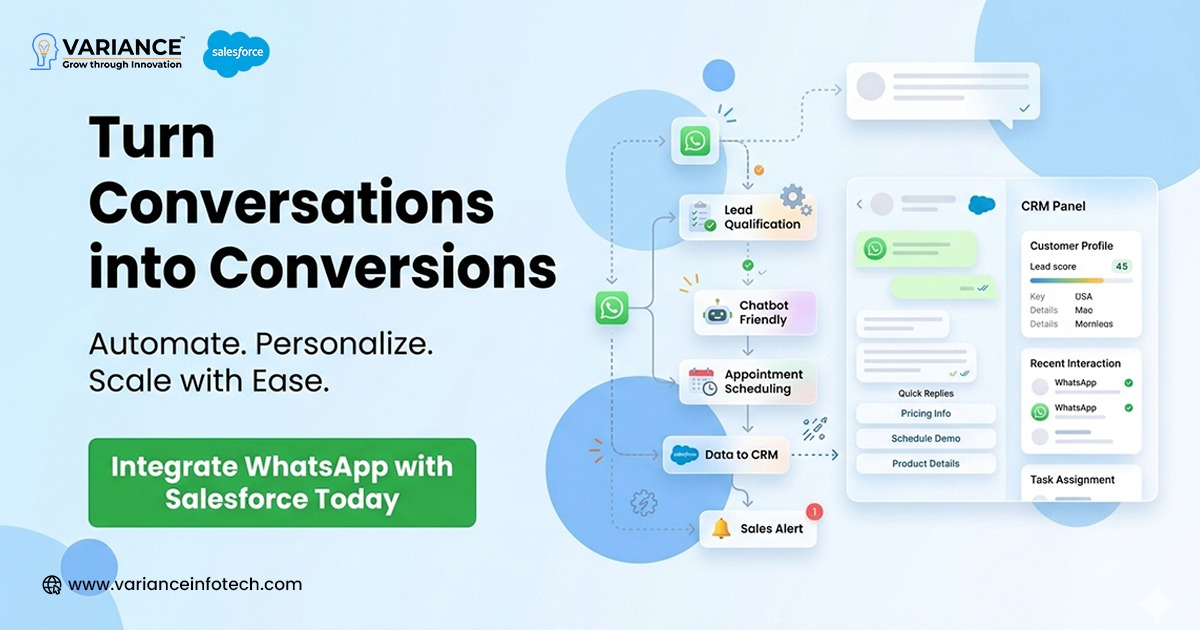
After the integration is enabled, incoming WhatsApp messages can lead to lead creation within Salesforce. For instance, when a potential client messages a business inquiring about its services, the system can automatically capture a few basic pieces of information, including phone number, message content, and the timestamp. This information can, in turn, be used to create a new lead record in Salesforce. A sales representative can look at the lead, add additional information, and immediately start the follow-up.
Step 4: Route Leads to the Right Sales Representative:
Taking leads is just the first step. Lead routing is essential to make sure the queries are answered promptly & efficiently.
Leads can be automatically assigned through Salesforce workflows to queue members or individual users according to criteria, for example, region, product interest, etc. Rules such as this can be based on geographical region, product line, or sales territory.
This automatic routing makes sure that no delay is taken once a lead is captured, and every lead gets to the right agent.
Step 5: Use Automated Responses for Quick Engagement:
Customers expect instant replies. They may lose interest if they wait too long for a response.
With Salesforce integration for WhatsApp, companies can deliver an instant reply to confirm the request. Such pre-programmed messages can be greetings, useful information, or next-step instructions.
Automation handles the initial interaction, but sales reps take the conversation from there with personalized replies.
Step 6: Track Conversations and Follow-Ups:
Among the top benefits of capturing WhatsApp leads in Salesforce is the tracking of conversations. Every conversation with the customer becomes a part of the record of the lead. Sales teams can look up historical interactions and be sure that they’re speaking with an informed and unified voice. Follow-up reminders can be set in Salesforce, as well, to keep teams organized and talking to prospects in a timely fashion.
Step 7: Analyze Lead Performance:
Salesforce has robust reporting tools that enable businesses to track the performance of lead generation and communications.
Businesses can monitor the number of leads generated from WhatsApp, the speed of response, and the handling of queries that translate into customers.
With this knowledge, companies can evaluate the impact of their messaging strategy and understand where they can level up.
Best Practices for Managing WhatsApp Leads:
To make the most of the WhatsApp and Salesforce integration, companies should know and follow a couple of best practices.
Firstly, you want to make sure your responses are still timely. Customers today expect instant or near-instant responses on messaging platforms.
Keep lead records neat so sales representatives can find customer data and history at a glance for easy access. Lastly, be helpful and personalized in your communication, as opposed to generic messages. When customers feel understood, they’re more willing to engage.
Final Thoughts:
WhatsApp has evolved into a robust customer communication channel. A lot of potential buyers now contact through messaging applications before making a purchase decision.
Without the right processes, these conversations can be lost or forgotten. WhatsApp with Salesforce integration enables companies to capture all inquiries, turn conversations into leads, and better run the prospects. A systematic approach to lead capture and management enables companies to respond more quickly, engage customers, and have a better shot at turning conversations into sales. For businesses wanting to simplify lead management, bringing WhatsApp leads from conversation straight into Salesforce is an elegant and effective answer.
Do You Need more information?
For any further information / query regarding Technology, please email us at info@varianceinfotech.in
OR call us on +1 630 534 0223 / +91-7016851729, Alternately you can request for information by filling up Contact Us

 Please wait...
Leave a Reply