In many companies, phone calls remain among the strongest channels for sales and support. Still, millions of dollars in potential sales are lost every day because calls go unanswered, callbacks are delayed, or telephony platforms and CRM tools are disconnected.
That’s where Salesforce CTI (Computer Telephony Integration) comes in to flip the script. When you integrate your telephony system with Salesforce, you enable your business to capture and analyze every call, turning them into valuable data, actionable insights, and, ultimately — more sales.
So, how is it that Salesforce CTI integration enables the business to translate missed calls to tangible revenue growth, let’s have a look here: Increase your revenue with the Salesforce CTI integration.
The Problem with Traditional Call Handling:
Many companies still use separate solutions to manage calls and customers’ information. Customer information lies in Salesforce, but calls to sales or support teams can be heard on one platform.
This results in a number of challenges that include:
Unanswered calls that aren’t recorded
Manual call logging and data entry
An inability to track customer interactions
Follow-ups with potential leads are further delayed
Limited knowledge about which sales calls perform best
If not integrated correctly, meaningful conversations with customers can be lost in the process.
Enter Salesforce CTI, a simple, cloud-based application that helps businesses answer the call – literally – and bring a new order to the madness of phone calls.
What is Salesforce CTI Integration?
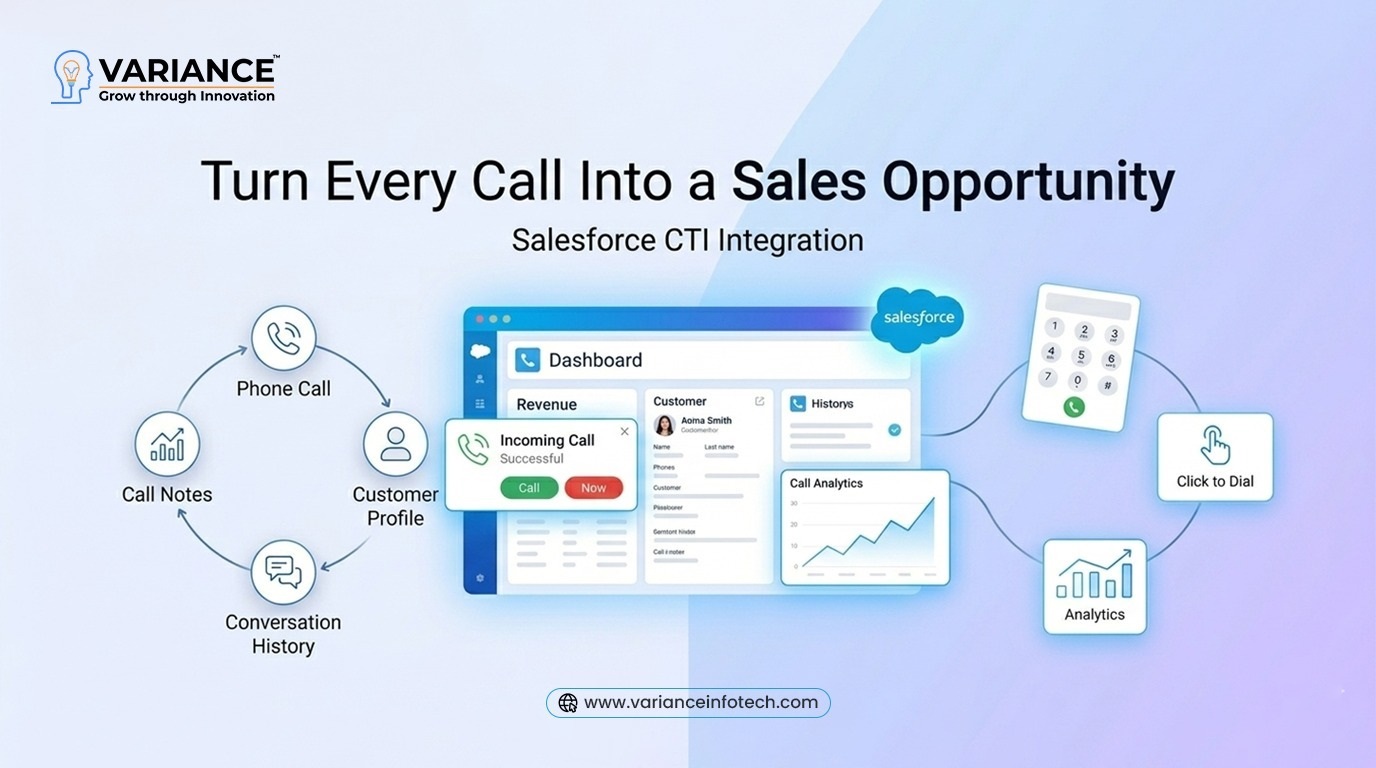
The Salesforce CTI integration links your phone system with salesforce enabling you to dial directly from your salesforce dashboard, receive inbound calls, and view Salesforce customer information when you receive calls.
With the integration, agents don’t have to toggle between multiple tools. They have the ability to view customer data, log call activity and monitor conversations all from one window.
Here are some typical CTI features:
Click-to-dial directly from Salesforce records
Automatic call logging
Caller identification and screen pop-ups
Intelligent call routing
Call analytics and reporting
Integrating telephony and CRM enables organizations to deliver a more unified and streamlined approach to their daily operations.
Turning Missed Calls into Opportunities:
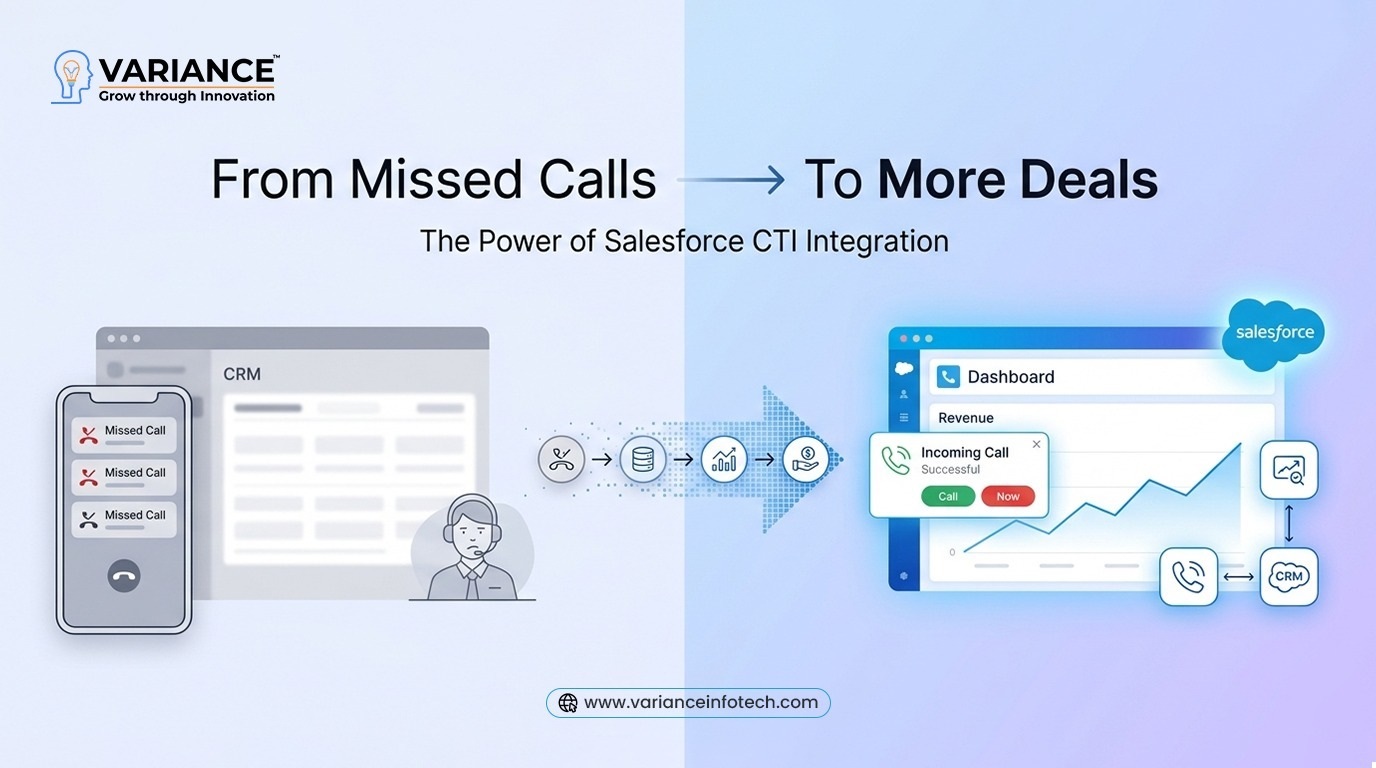
Missed calls equal lost leads. And if your team isn’t available to talk when a potential buyer tries to reach you, they could just go find a competitor.
Salesforce CTI avoids this by automatically recording missed calls and firing follow-up actions.
Like:
Salesforce Missed calls are logged automatically
Sales reps can be assigned with follow-up task
The customer history is available before you call back
Letting so that every missed call is another chance to close a deal and not a lost opportunity.
Faster Sales Conversations with Customer Context:
Customers have come to expect fast, informed answers when they call a business. But when agents are required to look up information across multiple systems, the conversations slow to a crawl and become frustrating for everyone.
Salesforce CTI addresses this with screen pop which immediately shows the customer information when a call is received.
Immediately see the below for Agents :
Customer history
Previous interactions
Open cases
Purchase records
With that context, sales teams are able to customize conversations and answer questions more quickly. This results in greater first call resolution and higher levels of customer satisfaction.
Boosting Sales Team Productivity:
The time spent on manual dialling, taking notes, and logging calls can drain a sales rep’s day.
With CTI integration, the majority of these repetative actions are automated.
As an example:
Sales reps can call leads using click-to-dial
Call information is automatically logged into Salesforce
After call notes are logged without any manual entry
These seller tools enable meaningful conversations, rather than admin ones. Companies that utilize integrated CTI systems have experienced dramatic increases in agent productivity and call effectiveness.
Delivering a Better Customer Experience:
Customers demand personalized, seamless experiences at every interaction in today’s world.”
Salesforce CTI makes this a reality, by providing agents with a 360-degree view of the customer on each and every call.
Agents don’t need to ask repetitive questions such as:
“Can you confirm your account details?”
“Have you been in touch with us?”
Instead they can swiftly ascertain the issue and offer a customized solution.
The result?
Quicker help.
More personalized conversations
Stronger customer relationships
Data-Driven Sales Decisions:
A major benefit of CTI integration is the information it produces.
Every call is a source of insights and data.
Businesses can monitor:
Trends in call volume
Conversion rates of leads
Agent performance
The average handling time
Customer satisfaction
“This data is stored right inside Salesforce, so managers can look for trends, coach sales, and boost team performance.”
These insights contribute to the refinement of an organization’s sales strategy and increase the conversion rate over time.
Smarter Call Routing for Higher Conversions:
Another strong feature of Salesforce CTI is smart routing.
Rather than randomly dispersing calls, the system can route them according to:
Customer history
Experience of agent
Level of priority
Language preferences
This allows customers to be connected to the right person at the right time, resulting in efficiency and satisfaction for both the customers and service agents.
Improved routing results in faster resolutions and more opportunities for closing deals.
Why Businesses Are Adopting Salesforce CTI:
A growing number of companies are focusing on Salesforce telephony integration as it has a direct effect on revenue and the customer experience.
Primary business benefits of the service include:
Fewer missed opportunities
Increased sales productivity
Greater customer engagement
Consolidated communication data
Actionable call analytics
Rather than viewing phone calls as isolated events, CTI integration turns them into a strategic business resource.
Final Thoughts:
In the end, customer service is everything (even in the Industrial Revolution). A missed call can lead to a lost lead, an unhappy customer, or lost revenue.
With Salesforce CTI integration, you can make, receive, and log calls and sync call information seamlessly with Salesforce data.
Integration of telephony and CRM allows your organization to deliver your staff the tools to respond faster, work smarter and finish more sales, just by using familiar applications.
The outcome is straightforward but powerful: missed opportunities are reduced and successful sales conversations are increased.
Do You Need more information?
For any further information / query regarding Technology, please email us at info@varianceinfotech.in OR call us on +1 630 534 0223 / +91-7016851729, Alternately you can request for information by filling up Contact Us
Urvi is a marketing strategist at Variance Infotech, specializing in promoting the company's expertise in mobile app development and CRM solutions, including SuiteCRM and Salesforce, across various industries. With a focus on helping businesses enhance their digital presence, she plays a key role in driving growth and innovation, making a significant impact on the global digital landscape.




 Please wait...
Leave a Reply